
Service Hotline:0871-68351609
Company Email:concal@163.com
Company Address:
No. A-423, Phase I Base of Yunnan University Science and Technology Park and Yunnan Overseas Chinese Entrepreneurship Park, High tech Development Zone, Kunming City, Yunnan Province

Principles of starchy food triggering obesity and postprandial blood glucose elevation

Starchy foods trigger obesity
Starch is broken down into glucose in the body: starch is a type of carbohydrate which is broken down into glucose in the body. Once glucose is absorbed into the bloodstream, it raises blood sugar levels.
Elevated blood sugar levels: When blood sugar levels are elevated, the body needs to secrete insulin to lower blood sugar. If the blood sugar level continues to rise, it can cause damage to the body.
The role of insulin: Insulin is the only hormone in the body that can lower blood sugar. When blood sugar levels rise, the production of insulin increases. Insulin not only lowers blood sugar but also promotes fat synthesis.
Fat Synthesis: When insulin levels are elevated, the activity of the enzyme liposynthase also increases, leading to increased fat synthesis. If the body consumes more starch than the body needs, this excess glucose will be converted to fat and stored, leading to weight gain and obesity.
In addition, the higher calorie content of starchy foods is also a contributing factor to obesity. Starchy foods tend to be rich in calories and sugar, such as bread and rice. These high-calorie foods tend to make people overeat, resulting in energy intake exceeding consumption, which ultimately leads to weight gain.
Overall, there is a balanced relationship between starchy food intake, blood glucose levels and insulin secretion. If this balance is disrupted, for example by consuming too much starchy food, or if the body is unable to effectively utilize insulin to lower blood sugar, then weight gain and obesity will result.
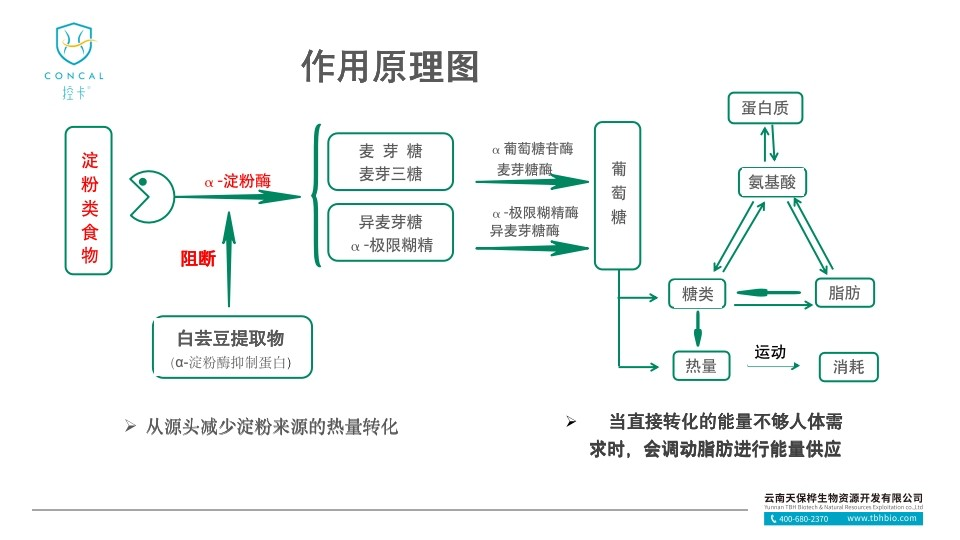
Starchy Foods Trigger Elevated Blood Sugar After Meals
The principle of starchy foods triggering postprandial blood sugar increase is mainly due to the fast digestion of starch. When starchy foods, such as rice and bread, are consumed, they are rapidly broken down into glucose during digestion, leading to a rapid rise in blood glucose levels.
In addition, certain specific types of starchy foods, such as refined white rice and foods made from refined white flour, are even digested at a rate comparable to that of white sugar, which is also a carbohydrate, so they can also rapidly raise blood sugar levels.
In the case of elevated blood sugar, the body secretes insulin to lower blood sugar in order to keep it stable. Insulin not only lowers blood sugar, but also promotes fat synthesis. When insulin levels are elevated, the activity of the enzyme liposynthase also increases, leading to increased fat synthesis. If the body consumes more starch than the body needs, this excess glucose will be converted to fat and stored, which is a contributing factor to obesity.
Previous Page:
Next page:

WeChat Public Number

Mobile website

Company Address
Address: No. A-423, Phase I Base of Yunnan University Science and Technology Park and Yunnan Overseas Chinese Entrepreneurship Park, High tech Development Zone, Kunming City, Yunnan Province

Telephone
0871-68351609

Enterprise Email
concal@163.com
Copyright©2024 Yunnan Tianbao Birch Biological Resources Development Co., Ltd.
Website Construction: 300.cn Kunming Privacy Agreement
Right online agent component
Right online agent component